

By Wayne Gregory
Hawthorne Fellow 2011
___________________________________________________________
 1. January 29
It’s my tenth birthday and my teacher makes the class sing Happy Birthday to me. My mother brings chocolate cupcakes for the class and no one calls me Fatso. I get to be first that day: first in the lunch line, first to go to the library for free reading time, first one for bathroom break. Everyone is nice to me, but I know it will all be back to the same old thing the next day.
After school, Mama gives me the same line she gives me every day: “Are you going to sit in front of that TV all afternoon?” In the kitchen that opens into our den, she lifts her hands from the bowl of ground beef, tomato paste, and oatmeal she is mashing into meatloaf for supper. Bits of the mixture cling to her hands as they hang in front of her apron. “It’s a perfectly nice day outside. Any normal boy would be out there playing.”
Plopped on the couch, with a glass of iced tea, a peanut butter and mayonnaise sandwich, and a bowl of chocolate ice cream, I watch late afternoon reruns of The Andy Griffith Show.
“I worry that you’re always cooped up in this house.” She wipes a bit of sweat from her upper lip on the sleeve of her checkered blouse. “And always watching too much TV.”
I gulp down some tea and take a big bite of my sandwich.
“If you’re not going outside, at least turn that thing off and get started on your homework.”
“Mom. Can I just see the end of Andy Griffith?”
“All right. But don’t dawdle after that.” She dumps chopped onions into the bowl then sinks her hands back into the raw mixture.
When the show is over, I retreat upstairs to my room. The small corner room with dark oak paneling, two windows, a trundle bed, and a built in desk is my private refuge. I spread out my Lego on the floor and put a record on my portable record player.
“Ya got trouble,” I sing like no one is listening. I know every word by heart. I become Professor Harold Hill and my room becomes the town square in The Music Man. I build mansions with my Lego and put on a play with my puppets. I feel safe and unfraid when I am playing alone. I feel normal when it’s just me.
I lose track of time until I hear my mother’s muffled voice calling up the stairs. “Honey, wash up and come on down for supper. Make sure you wash up.”
That night, I eat two helpings of meatloaf and all five of the left over cupcakes. The icing is sweet, but the cake already tastes dry.
 2. April 20
I’m lying on the carpet in my brown and yellow, cowboy pajamas. My chin in the palm of my hands; my legs crossed at the ankles; my hair still damp from a hurried bath; the smell of Dial soap and Johnson’s shampoo. My younger sister is sitting at the end of the worn green couch, fiddling with doll stuff in her pink and black Ponytail Barbie case. My eyes are glued to the Zenith console TV. The psychedelic colors of the NBC peacock swirl around the oval screen.
“This program is brought to you in living color by NBC,” the announcer says.
“Mama, it’s starting,” I call out.
The opening notes of the Harold Arlen score resonate from the TV speakers. I forget the world around me and can’t wait to watch the four travelers skip down the yellow brick road to find a brain, a heart, a home, the nerve. Somewhere over the rainbow gets into my head and will never leave. The tornado that sweeps across the Kansas barnyard lifts the house off its foundation and slams it down on the wicked witch. My eyes open wider as I watch Dorothy creep through the black and white house and open the door to a Technicolor world.
Then, three clicks of the ruby slippers and Dorothy is back in her black and white world where they tell her it was all just her imagination. A Technicolor dream. I lie in bed and stare at the bumpy white ceiling of my room. I hear Mama on the phone to Grandma in Florida. Mama tells her we’re coming in June, as soon as school is out. I fall asleep thinking about the warm lazy sand and the Atlantic waves that will be my playground. I dream I’m in Dorothy’s house and we’re spinning in the cyclone. Judy Garland takes my hand as the house lands. I walk through the rooms and suddenly it’s just me. Creeping to the door. It swings open and I step into the sunshine of Fernandina Beach, Florida. The sea oats bow in the breeze. I run waist deep into the surf. The waves shove me underneath the surface, into a swirl of water, sand and broken shell bits. The undertow is trying to pull me farther away. I feel like I’m drowning. I wake up and stare through the darkness at the shadows in my bedroom until the cadence of the oscillating fan rocks me back to sleep.
 3. May 1
I’m growing up in a black and white world, too. A hot, small, Louisiana town - small in so many ways.
“Our coloreds don’t make trouble here and they’d better keep it that way, if they know what’s good for ‘em,” I hear the pot-bellied deacon say as he smokes his cigarette with the other men outside the First Baptist Church on Sunday.
“Mama, why does the door say ‘white’s only?” I ask when we make our weekly trip to the East Thomas Street Laundromat.
Her shoulders tense; her brow furrows. “You’re too young to understand,” she tells me.
I learn there are so many things you cannot talk about.
“We don’t believe in discrimination against Negroes,” my father explains, never looking up from his Sunday Times-Picayune newspaper when I ask him why he’s not upset like all the rest of our neighbors and church friends about the three black kids who are coming to our school.
At school, the other kids corner me. “You’re nigger lover like your Dad?” I hang my head and walk away until their high-pitched taunts wither behind me. I want to hate those black kids, too. But, I can’t.
Jesus loves the little children, all the children of the world.
Red and yellow, black and white,
They are precious in His sight,
Jesus loves the little children of the world.
We all sing it together in Vacation Bible School as we collect our dimes for the missionaries in Africa. But I see that black and white doesn’t mean the three Negro children at our school. They must be something else. I don’t want to be something else, like they are. I want to be normal, like everybody else.
 4. May 13
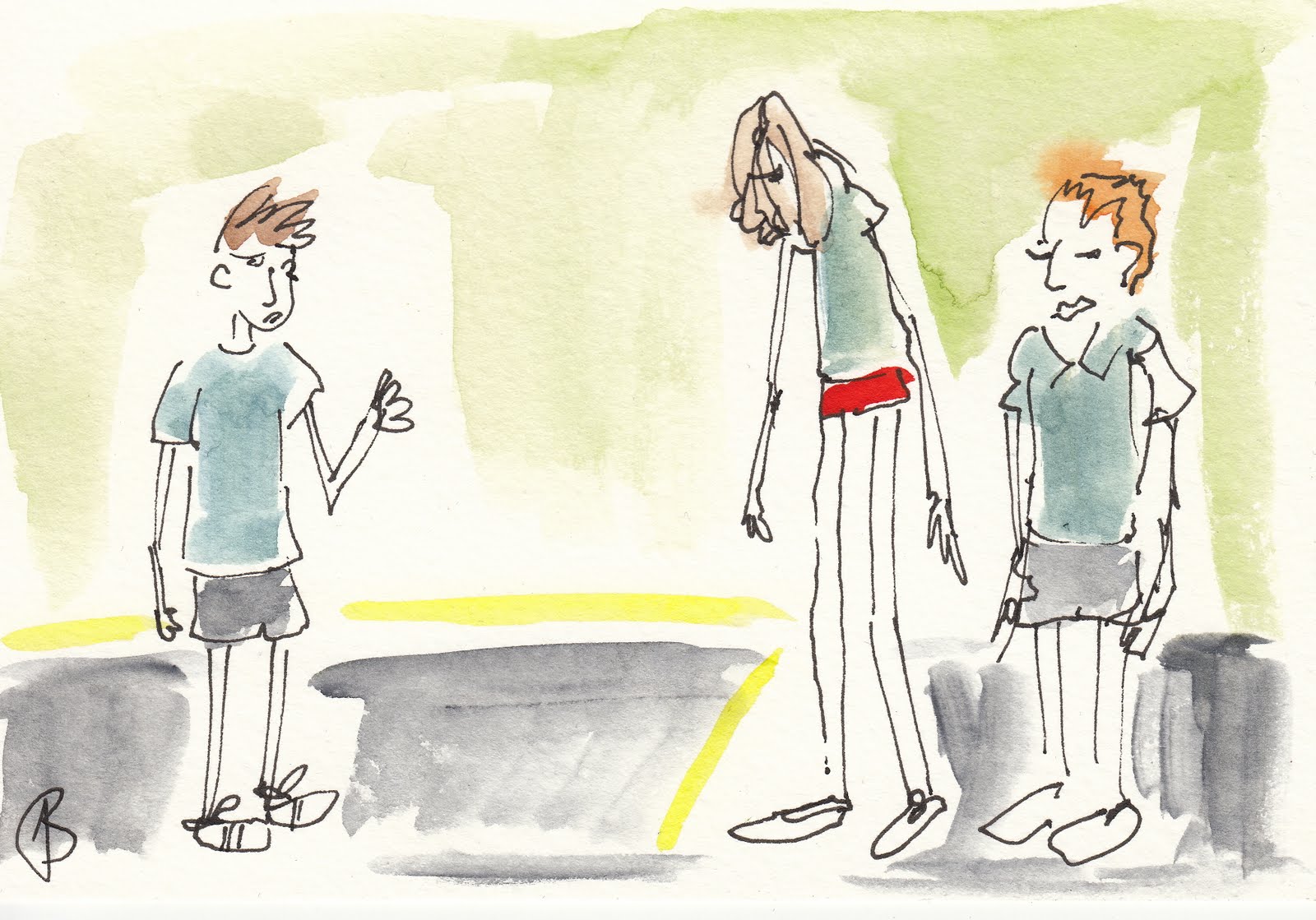
At school, when we choose teams in P.E., Coach always picks the same two captains. Everyone huddles close together on the basketball court. The captains scan from face to face as the other boys raise their hands. I shrink to the back of the crowd and look down. The captains call out names in order of popularity or athletic ability.
“Tracy!” one of them yells.
“Paul!” the other one shouts. The team begins to take shape. The chosen boys bellow out their own suggestions. “No. Pick Brian. You don’t want to get stuck with Fatso.”
Coach stands off to the side looking at his clipboard. I think this time I might not end up last. But, I do.
One of the captains sighs and points. “Ok. You.” I slip behind the team and wait for the dreaded words from the Coach. He grunts at my team. “Skins.” The other boys strip off their shirts. I look at the tire tube of fat around my middle. The game begins. I don't understand the rules, but the other boys all seem to know them, like a secret. I can’t dribble or shoot. I just run up and down the court with my fat flapping and wish it was all over; wish I could be like everyone else.
Why am I so different from the other boys my age? Why do I like musicals and playing dress up in my room instead of sports and hunting? The other boys sometimes laugh at me and call me names like faggot and queer. I don’t know what they mean, but it feels like something is wrong with me. I haven’t always felt this way, but I’m ten years old now and I don’t feel normal.
 5. June 1
School is finally out. My father packs us in his lime green Ford Falcon wagon and drives us to Florida. We tour along the Mississippi Gulf coast on U.S. 90 past massive live oaks and magnolias that shade old Civil War mansions along the road. On through the tunnel that burrows beneath Mobile Bay, into the unfolding ribbon of the Florida panhandle; past the snake farm at De Funiak Springs then on toward Tallahassee. I stare at the billboards with pictures of women in bright pink bathing suits, standing on each others’ shoulders in a pyramid formation, skiing across the waters of Cypress Gardens. They’re pretty, but why am I more interested in the muscled man with no shirt and wavy black hair driving the boat? The farther we drive down U.S. 90, the more my black and white world fades away. A roadside picnic from a large Styrofoam chest: Pimento cheese sandwiches on white Wonder bread, cold fried chicken, a tin of Charles chips, homemade oatmeal cookies, and a thermos of sweet iced tea. I prop my elbows on the table and nibble at a piece of chicken. “Are we making good time, Daddy?”
He doesn’t look up from his paper. “We’re doing all right.”
Then, deeper into the Sunshine state. My eyes catch the vivid colors in the signs for the glass-bottomed boats at Silver Springs and for Gatorland in Kissimmee. Booths hawking seashells, and pickup trucks selling fresh shrimp dot the edges of the highway. Finally, as the sun reclines behind us, we turn onto Florida A1A, cross the Intracoastal Waterway Bridge, then down Eighth Street into the center of town. A large sign splashed with rainbow colors sits to the side. On it, a buccaneer with an eye patch and a parrot perched on his shoulder raises his hand. Welcome to Fernandina Beach on the Isle of Eight Flags, the sign announces.
On past rows of Victorian houses, island-aged along the bumpy brick roads. Down Atlantic Avenue then onto Fourteenth Street then into the sandy driveway of my Grandma and Papa. I’m the first one out.
“Grandma, we’re here.” I summon her from the house.
She smiles and holds out her arms. “Well, sweetheart..” The end of her sentence runs away as I wrap my arms around her chubby middle. Grandma Hazel calls everyone sweetheart and darling, and spends most of her time with the other church ladies saving souls at the First Baptist Church. And, she believes in feeding the ones she loves. The more the love, the more the food. And oh how she lavishes it on me.
 6. June 2
My father leaves this morning and drives back to teach summer school in Louisiana. My mother, sister, and I will stay for the next two weeks until he returns. After breakfast, I’m sitting in the back seat of my grandfather’s 1964 Mercury Grand Marquis cruising down Atlantic Avenue, east toward the main beach. The sun floats straight overhead. Windows rolled down. The thick, salty air blows through the car, across my suntanned face. As we ride, I can see the back of Papa’s greased back hair, neatly trimmed above his leathery, waffle iron neck that sticks out of his blue, checkered J.C. Penney work shirt with the carefully ironed collar. He never says much when we’re together.
Last night, he was in his radio shack. My flip-flops carried me through the louvered glass door leading from the Florida room onto the sand-covered patio. I shuffled across the bricks and stood in the open doorway. A bare light bulb hung from the rafters, but most of the room’s dim light came from the shortwave radio screens. Papa sat in their glow, sipping a mug of hot, Lipton tea and smoking his Camel cigarette. The smoke washed past me as I climbed onto a stool in the shadows. The radio static and the modulations of the tuning dial competed with the on again, off again clackety-clack of the teletype machine that spilled a ribbon of paper onto the floor. We didn’t talk, but he did. That night, it was someone in Australia.
“W5DYG, here. Over,” Papa says. In this light he doesn’t look like a grandfather. He’s Clark Gable and he doesn’t give a damn. The lines on his brown neck seem more pronounced as his head moves back and forth to the mic. His frequent laughter is cut short by convulsive fits of smoker’s cough. I listen to him and slip into his radio world. The world is far away and everything feels safe. He will be dead in four years and for the next thirty, I will wish I knew him like the men on the radio did.
We’re almost to the beach now where Papa will drop us off for the day. My mother sits silently in the front seat; a broad-rimmed straw hat perched on her head and the white scarf around it fluttering in the window breeze. She hugs a large beach bag and stares out at the palmetto. I’m right where I want to be and I feel safe.
 7. June 3
This afternoon, I go with Grandma to buy shrimp at the Marina where St. Mary’s River forms a brackish bay then flows on into the warm Atlantic stream. I hold her soft, plump hands and try to keep up as her black pumps, stuffed full of feet, pound across the wooden dock. With her big purse slung over her forearm, she lumbers over to a shrimper who has just arrived. Several pounds of fresh, smelly Atlantic white shrimp. I stand at the end of the dock and watch flocks of gulls escort other shrimp trawlers in. I wonder where the boats have come from and what it’s like to sail so far into the ocean that you can no longer see the shore. Grandma calls to me. She’s worried that I’m too close to the edge.
Tonight, Grandma tells Mama that they are selling their house and moving to Arkansas that Fall. Papa is going to help his brother run a 160-acre chicken farm.
It takes a moment for me to figure out what this means. When I realize that this will be my last summer at the beach, I feel like I’m falling inside. I thought this place was forever. Why is everything changing? My voice quivers. “What about the beach?”
Grandma and Papa laugh. Mama pats me on the head. “Run along and play,” she says. “We’ll have time for the beach tomorrow.”
The grownups keep on talking and I go outside. I stroll down a sandy trail in the woods next to my grandparents’ house and stop when I see a giant sea turtle lumbering into the undergrowth. He rocks to each side as his feet sink into the sand with each deliberate step. I turn and feel the sting of the nettles against my ankles. Tears burn my eyes. I run back inside so Grandma can rub calamine lotion on my skin.
 8. June 5
Tonight, I help Mama and Grandma dip shrimp into thick corn meal batter. I listen as they plop and fizz when they drop into the hot oil. The whole room smells deep-fried, cooked like my sunburned skin. Grandma’s made everything from scratch: thick, doughy biscuits on a Cypress Gardens platter; a large bowl of Crowder peas swimming in their own thick juice; an even larger bowl of lumpy mashed potatoes with gravy made in a cast iron skillet; and a glass pitcher full of sweet, iced tea. We cram around the large cherry table that fills the small dining room. An AC window unit hums loudly and chills the room with stale air. The grownups are quiet as they listen to the boxy television in the adjoining room. Someone with a double name has killed Robert F. Kennedy. I don’t understand what’s going on, but I can tell something is very wrong.
 9. June 5
My mother glances my way occasionally as if she wants to say something. My Grandfather seems troubled by what he sees on the TV. He says nothing. He just listens to the newsman explain.
Spokesman Frank Mankiewicz reported today that the Senator’s doctors are concerned about his continuing failure to show improvement and have listed his condition as, and I quote, “extremely critical as to life.” Walter, it appears that we now know the Senator was shot a total of three times: once behind his right ear at a range of about 1 inch and bullet fragments were dispersed throughout his brain. The two other bullets entered at the rear of the right armpit. One exited the chest and the other lodged in the back of his neck.
We hold hands while Grandma says grace. “Dear Lord,” she says in a soft and different voice. “ We thank thee for this food you have provided and the many blessings you have bestowed on us. We ask that you bless this food to the nourishment of our bodies, and us to Thy service. Be with Senator Kennedy and his family at this time and restore him to health. We give thee thanks and ask these things in the name of Jesus. Amen.”
“Why did that man shoot him,” I ask.
“Shh. We’re trying to listen to the news,” Mama says.
I can often see her feelings in her face. When Mama is angry, her eyes flash and she grits her teeth. When she is happy, her eyes dance, and her mouth falls open. Tonight her forehead is pleated and she’s biting her lower lip. Her eyes look dark. I hope we still get to go to the beach tomorrow.
 10. June 6
Today at the beach, Mama plants her Dollar Store folding chair in the white sands and calls out to me as I run into the edge of the Atlantic, “Watch out for the undertow.” She will say this often throughout the day as she watches her universe splash in the waves. She is young and slim and beautiful. Sometimes I stop and look back at her, sitting casually underneath the sun-drenched sky. The white scarf on her floppy hat falls down across her bare, caramel shoulders. Dark sunglasses hide her eyes and point all attention to her bright red lips. From a big basket, she pulls out her Coppertone suntan lotion and rubs it on the two slender legs that flow from her baggy, canary-colored shorts. I only have a few more days at my beach until we have to leave for good. When I ask Mama if we could come back next year, she smiled and said, “We’ll see.” I know what that means. I don’t want to go back home. I don’t feel normal there like I do here. But, now there’s no more here for me. Why do things have to change?
I play on my beach beneath a sky as endless and blue as the ocean. My dreams, as bold and uninhibited as the sun. I wonder what’s on the other side of the water and what it would be like to always feel this happy. Here, time moves as unhurried as the tides. I play alone but don’t feel lonely. We stay all day until storm clouds snatch the sunlight from the beach. The air grows colder and the water turns a darker blue. I watch the clumps of sea oats atop the dunes make their stand against the ocean winds; I watch my mother guard me with her adoring glances; I watch the Atlantic ocean with its undertow and its endless imaginations. Mama says it’s time to go. I never want to leave.