
Attic faculty notes: Elizabeth Rusch on...
 ...teaching
"Writing nonfiction for children is one of the most challenging and rewarding forms of writing I do. To write a wonderful nonfiction children's book you have to use clever research techniques and find the STORY in the material or find a super-creative engaging way into the information. The process stimulates both the left and right parts of your brain. I hope students come away with a deep appreciation for good nonfiction for children (so much more than list of facts!), inspiration to delve into a nonfiction project for kids, and useful research, imagining and writing techniques that help them with any writing they do."
...a book to read
"Other than my recent release, For the Love of Children: The Remarkable Story of Maria Anna Mozart? I would have to say The Extraordinary Mark Twain According to Suzy by another Portland author, Barbara Kerley."
...writing advice
"Dig deep. Into the research, the structure, the writing."
Don't miss the chance to take a class with Liz
Attic faculty notes: Dao Strom on...
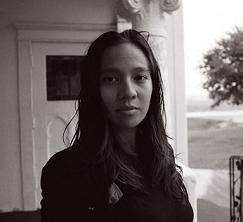
...teaching
"I hope not so much to "teach" you how to write, as to offer some deeper ways of perceiving, reading, and contemplating literature and the work/life of writing. I believe that learning how to see and understand the work, to heed our intuitions and explore our reactions, to both what we read and what we write, are the long-lasting skills that will help you to ultimately become a better writer. Writing is a relationship with your creative self. Everyone has a creative self worth accessing and heeding and expressing. I enjoy helping writers tap into their deeper creative instincts and approach the art of writing from a personal place."
...a book to read
"I've just recently opened up Open City, by Teju Cole. It starts out in much the meandering tone of a W.G. Sebald novel, but the terrain its narrator walks in present-day New York City, and many of the stories and interactions he encounters are those stories of immigrants. This novel is utterly refreshing - it gives me hope for a subtler current entering the stream American contemporary lit. At least I hope."
...writing advice
"Listen to your intuition, discover your own rhythms. Respect the ebbs and flows of the endeavor. Think of writing as nurture, not accomplishment or competition or product. Find your way to making it matter on the level of soul."
Attic faculty notes: Kelley Baker on...

...teaching
"Kay Boyle (writer & political activist) once told me, “I teach my writing students to become revolutionaries.” And that sums it up for me. I teach the rules and I expect the good students to break them. There is no finer feeling than to build a good foundation and then hand someone a sledge hammer and let them smash it, to give us their own unique point of view."
...a book to read
"One of my favorite Screen Writing Books is William Akers’ Your Screenplay Sucks! 100 Ways To Make It Great. I also like Blake Synders, Save The Cat. I also recommend the classics, Chinatown, To Kill A Mockingbird, Double Indemnity and a host of others. You want to write screenplays, you better learn how to read them."
...writing
"The toughest part of writing is putting your butt in the chair! Until you can do that consistently and tune everything else out, you’re not really writing. Once you make writing a habit you’ll be amazed how much you miss it on the days you don’t write."
Register now for Kelley's screenwriting workshop
Attic faculty notes: Dave Jarecki on...
 ...teaching
"What I love most about teaching at the Attic Institute has to do with the dynamic that forms within each group of workshopping writers. Each writer brings his or her own bend and energy into the group which, when paired with the others, spins the group forward and helps me prepare unique lesson plans that encourage each writer and honor the group spirit. My greatest hope is that the workshop provides students with a new perspective on their writing, and renewed confidence that their work is valid and good."
...a book to read
"Two companion books: The Hero with a Thousand Faces by Joseph Campbell and The Writer's Journey by Christopher Vogler."
...writing advice
"To the best of your ability, create what you consider to be a sacred writing space. More than having "writing time," space is the most important assest to have, especially for writers who may struggle with focus. A dedicated space is a fantastic and crucial way to honor yourself and your practice."
Attic faculty notes: Rebecca Koffman on...

...teaching
"Writer's workshops can be an immersion program in how to pay attention. Group reading and writing exercises inspire participants to be more curious, more aware and more engaged. In the best workshops everyone collaborates to find and develop what is most promising in a story. It's an exhilarating process."
...a book to read
"Janet Burroway: Writing Fiction."
...writing advice
"Take a walk. Be a stranger in your own neighborhood. Look out for nuance and texture."
Attic faculty notes: Kathleen Halme on...

...teaching
The students are splendid. They bring to workshop years of experience as surgeons, accountants, social workers, coffee roasters, hair stylists—and as writers. I've never seen a “sitting alone in my room...” poem at the Attic. The poets are open to experiment and are deeply involved in their work and words. After a course ends, they often keep meeting on their own to critique work and talk about books of poetry, a sign of their commitment.
...a book to read
I recommend Random House Word Menu in every writing course I teach. It's very helpful because it organizes language by subject matter. I use it daily. For the past several years I've been smitten by the poetry of Susan Stewart. Will someone please recommend a finer contemporary poet writing in English so I can break away? But read The Forest, Columbarium, and Red Rover—to me these collections are reminders that the sublime is possible and present in our art. They make me work harder. If you are intrigued by the cross-pollination of science and poetry, a book of essays I've been enjoying is Contemporary Poetry and Contemporary Science by Robert Crawford, ed., Oxford University Press. 2006.
...writing advice
Give up often, but do it during your daily scheduled writing. Ritualize what's important to you. Practice all the powers of poetry—the musical, the incantatory. Prose is for paragraphs.