

By Christy George
Hawthorne Fellow 2012
Independent TV producer Christy George is working on a novel and a book about climate change.
___________________________________________________________
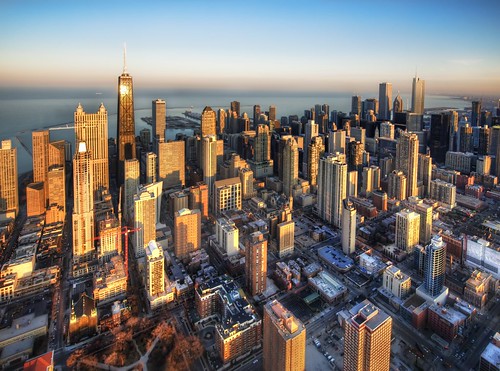
The outside air hit the minute the handicapped-access doors swooshed shut. Late June and the humidity was 82 percent in Chicagoland. Sweat beads popped on my forehead, my arms, between my thighs. I dripped until the AC froze the sweat on my skin and then I shivered. The street was wet so it had rained, but it didn’t touch the blanket of heat. By the time I got to Mother’s Le Baron, it was Midwest summer midnight. Full dark sky, a scatter of stars and a scrim of haze over the moon. Even inside my climate-controlled shell, the heat and dark pressed down on me.
Those first few nights, I’d stayed at Aunt Sassy and Uncle Mac’s up in Buffalo Grove, but I needed to be closer to Mother and her townhouse was ten minutes from the hospital. Five minutes in the other direction was the Osco where she dropped like a stone two weeks before.
Uncle Mac warned me not to stay at Mother's place, but he gave me the key anyway. I hadn't been there for, well, a long time. Since she retired. Maybe four years. Five?
I’d forgotten most of the street names but not the way home. It was dark and quiet in the alley where I parked. The key didn’t fit the back door, so I walked around to the front. The key worked, but the door wouldn’t open more than a few inches. I pushed hard with my good leg, the way I used to nudge the silver balls into the holes playing pinball that one year I got so good at it. Pinball is one of my sports, along with pool and poker.
The door wouldn’t budge and after a few tries, my leg hurt - that buzzy numbness that said if I didn’t stop what I was doing, the next thing I’d feel was my nerves going full electric. I put both hands into the next shove and the door moved a few inches, but something still barred the way. I knelt in the dark and reached around the doorjamb with my hands.
Paper, just paper.
Paper bunched up so thick the door wouldn’t move. I pulled out one wad and then another. Bills, and junk mail and Sunday Tribs in the moonlight. I stuck it all in the bushes and pulled out even more paper until the door swung easy enough for me to slip inside.
I smelled it as soon as I stepped into the living room. Old cigarette smoke, but something else, something darker and redder. A blood smell.
I slid my right foot along the floor and edged into the room. Paper rustled underfoot. It was hot and stuffy from being closed up a week with no AC, but that red smell went deep. It wasn’t strong but it was pungent – a sweet death rot that made my nostrils open wide.
I’d smelled that smell once before in a crappy apartment I rented but never found the source until the refrigerator died and the landlord replaced it and found a flattened mouse crushed underneath. This smell was bigger than a mouse, though – as big as a squirrel or a cat.
The living room was pitch dark. I groped the wall for a light switch but all I felt was nubby wallpaper painted over too many times. Stepped left and swooped my hand lower on the wall and then higher until I hit strings of something feathery. Like a spiderweb. I pulled my hand back fast and that’s when I found the light switch. Flipped it, but nothing happened.
I was still in the dark.
A small rectangle of moonlight angled left on the carpet, where I thought I remembered a table. Took another step slowly to slide along the wall in case there was something more solid than papers on the floor. Something that could trip me. Crab-walked like that to the table, but all it held was a TV.
Turned around and retraced the rectangle of light, then aimed myself at where I thought the couch was. Dark on the far side of the door now. My foot hit something that made a noise like a can. I moved in a slow zigzag pattern until I bumped into the soft couch with my left knee and at the same moment, my right knee hit a side table. I felt around the tabletop and found a lamp, gripped the metal base, traced my way up and hit the switch. Nothing again.
Nothing but that sweet red death smell.
I didn’t know if Mother’s juice was shut off or if she just hadn’t changed light bulbs. I closed my eyes to picture the living room and remembered a desk on the far side. Not the real one with Mother’s Gateway on it, but a formal desk that held stationary, scotch tape and stamps. I kicked a slow path toward it. I found the desk lamp and then there was light. Bright warm incandescent light that showed me way too much.
All that heat and I still shivered. Thick ropy cobwebs hung in all four corners of the living room from yellow walls I remembered as white before Mother smoked thousands of cigarettes. The pile of papers on the floor went as high as my shins and stretched all the way into the little dining ell Mother used as an office.
Now I knew what Mother meant on that last call when she said things had gotten a little out of hand.
The lamp bulb flickered as I kicked a path back to the front door and my suitcase. I rolled over paper, the little wheels twisting, on the way to the dining room where the air conditioner was. The AC started rackety and heat blew through the vents at first. I knew it wouldn’t be but ten minutes before it dripped sweat. It would ice up in an hour.
Then the light and the air conditioner blew. The house was crumbling around me. Maybe the AC overloaded the circuit, or maybe it was just my bad luck to arrive after Mother had used up all her good luck.
Blackness and quiet, and the red smell somewhere nearby. I had to pee, and I didn’t think I could take it if the smell was in the bathroom. I flipped the bathroom wall switch and Mother’s row of bright makeup lights flared.
In a way, that bathroom was the most shocking sight of all. It was spotless, all gleaming porcelain and clean towels. But the floor by the toilet was spongy and sagging so I peed with my legs spread wide, hoping I wouldn’t fall into the basement if the floor caved in.
I needed something to drink but the smell waited in the dim outside the bathroom. All that was left now was the kitchen. And that’s where the circuit breaker was.
Oh God, the kitchen.
Dishes in the sink and silverware so sticky it could never be washed clean. The oven was broken, or at least full of pots and pans. Maybe Mother just considered it storage space. Maybe she only used the grease-splattered microwave and the toaster-oven, melted cheese stuck to the tray and the bottom full of crumbs. I didn't see any, but I was sure there were bugs.
In the kitchen, the smell was overpowering - the summer smell of a New York restaurant dumpster that hadn’t been washed in weeks - stinky cheese, vegetable bin slime, and something else much worse, a heavy, charnel-house smell. Something dark and bloody. Something like a drowned corpse, soft parts eaten away, floating and bloated. Something dead and gone.
I held my breath.
I opened the refrigerator door and looked inside.
I saw a turkey.
Around Christmas, or maybe it was Thanksgiving, Mother mentioned that the company she used to work for had given her a holiday turkey. She’d only got as far as defrosting it. Now it was mid-June, and that turkey owned the space inside the fridge, fully contained within its heavy-duty bag but somehow still putting out that smell through the plastic.
I never minded the sight of blood. I’d seen a lot of my own during the polio years and it almost never made me cry, at least not whenever I knew it was coming, when the bleeding was planned. But I cried when I had my first period. That blood was so deep red it was almost brown, and it smelled like wet burning pennies. I hated it, hated giving up girlhood for something I never asked for, never wanted. The curse.
The turkey blood was like my first gush. Not that weak pink stuff that dribbles out of the turkey’s cavity when you take out the gizzard and the giblets, no, this was dark copper menstrual red. And it was thick with the months that had passed – six months of oozing inside the plastic bag. It would’ve oozed a little in December and January, but the real bleeding probably didn’t start until February, the coldest, most desolate month in a Chicago winter. The blood darker in March and thicker in April and the smell stronger in May. Now it was June and bleeding metal.
I don’t know how Mother stood it, smelling rotten turkey every time she cracked another ice cube tray for her martini. The smell alone was enough to blow Mother’s brain, to burst that tiny blood vessel like a broken hydrant.
There was so much red beyond the plastic, I almost couldn't see the bird’s carcass. The bones were melted now, turned to rubber and smoke. When I reached a finger to touch the turkey through the bag, it gave way - yielded, like a joke chicken, and even through the heavy wrapping, that turkey squirted a loud shot of foul into the room.
The smell of that rotting turkey never left my nose that night. Not when I ran the tap hot, soaped and rinsed a sticky glass from the cupboard and filled it with cold water. Not when I took a scalding shower. And not when I went into Mother’s room to crash. The bed was covered with paperback books, crumpled Kleenex and wadded-up dirty panties.
Mother slept in that bed for years.
I could do it for one night.
It would be my penance.
###
Uncle Mac and I stood outside Mother's back door at 9:00 a.m. Saturday morning, armed with forty empty packing boxes, four packages of giant sized, extra-thick Hefty bags, three quarts of ammonia, two pairs of pink rubber gloves and a fuzzy, neon green telescoping duster.
We had two things going for us. First, it was a perfect beach day, low 70's and sunny, with a cool breeze off the lake. Chicagoland got maybe five of these days all summer, and I desperately wanted to be headed to Lighthouse Beach, instead of to a poultry crime scene. But there it was, a gift of a day. The second thing Uncle Mac and I had going for us was Uncle Mac. Uncle Mac is George Clooney meets Cary Grant - in his sixties, tall, salt and pepper hair, a boyish grin. He wore a navy polo shirt, khaki pants, and boat shoes.
They’d all been sailors for years, Uncle Mac, Aunt Sassy and Mother. They raced 110’s in fair weather and foul, and foul can come up fast on Lake Michigan. They must’ve been in their late 20’s when they still took crazy chances, going out on the lake with thunderclouds overhead. They raced, and won, and lost, and partied, wild with youth and plenty of Scotch.
When Mother met Dick, they took a class together in power squadron, the kind of boats Mother used to call stinkpots. Mother stopped sailing when she married Dick.
When Mother was young, she was athletic and game for anything. They all were like that, Mother and Aunt Sassy and Uncle Mac. Even Dick. But Mother was different. She was a brassy broad before womens' lib made it okay to be brassy. She laughed too loud and smoked too much and when it came to drinking, she matched the men shot for shot. Maybe that's why she ended up stroked out and hooked up to a breathing machine. I guess we all suffer for our sins.
It had to be faced, so I put Mother's key in the back door and pushed. The door opened right into the tiny kitchen, right into the smell of rot.
"Okay then," Uncle Mac said. "I believe I've got a bead on that turkey already. Let's tackle it first, then everything else will be smooth sailing."
Left to myself, I would’ve diddled around, put that stuff away, washed dishes to clear counter space – anything to stall - but Uncle Mac was focused. He moved Mother’s kitchen stepstool into position as a staging area for our supplies, pushed aside bags of unopened groceries - mostly cans: gourmet items, like artichoke hearts, olive tapenade and smoked oysters in cottonseed oil, and emergency dinners: Campbell’s cream of mushroom soup and baked beans. Maybe by the end, all Mother ate was emergency dinners.
Uncle Mac tore open the package of large rubber gloves and handed me the smalls. Like surgeons, we put them on with that same snap of tight cuffs. He took out one Hefty bag, then another, and double-bagged them.
“Here’s the plan,” Uncle Mac said. “You hold the bag.”
“It already sounds like a bad deal,” I said.
Uncle Mac’s smiled and I saw the lines in his face.
“Not at all,” he said. “I will lift the turkey and place it in your bag, and carefully ease it all the way down. I will close the neck and you will hand me two twist-ties. We will exit the building together and deposit the offending bird in the trash.”
Uncle Mac paused. “Are we together on this plan?”
“Ten-four,” I said. There was sweat inside my rubber gloves.
An almost liquid wave of dead washed over us when Uncle Mac opened the refrigerator door.
"Oh my," said Uncle Mac. "Let's triple-bag it."
I hadn’t noticed before, but Mother had wedged in crap all around the turkey – spoiled lunchmeat and moldy cheese and mysterious packages of leftovers wrapped in napkins with grease spots shining through - but Uncle Mac was in gear now and faster than I could even identify and categorize stuff, he moved the rotten stuff surrounding the bird into the Hefty bags I held open with both hands.
And then the turkey sat alone – majestic in its putrefaction, a life needlessly sacrificed, wasted and gone to Thanksgiving hell.
Uncle Mac didn’t stand around contemplating the turkey. He grabbed it with two hands and hoisted the bird into the air with a firm grip, swiveled toward me and my Heftys and for one long moment, I got the full impact of blood and death. And the mass of the thing - maybe ten, twelve pounds of meat and another five pounds of blood and bodily fluids. A Tom turkey, not a Thomasina, and obscenely squishy.
Then Uncle Mac released the turkey deep into the bag and twirled the top shut. I dug into the Hefty box and came out with a sheet of twist-ties, ripped off two and closed it.
“OK,” Uncle Mac said. “Let’s walk.”
It took both of us together to support the bag, which sloshed as we walked out the back door, down the two concrete back steps to the path, and slow-marched seventeen paces to the trash can.
“You do the honors,” Uncle Mac said.
I lifted the trash can lid and we raised the bag up and over and down inside and it was done. It took maybe all of seven minutes from start to finish, disposing of this thing that had haunted me for days. And would haunt me for years to come.
“Good work,” Uncle Mac said and then he opened his arms and I walked into the protection of his strong arms and fabric softener smell. He hugged me so hard I could’ve let go everything – my legs, my back, the thing in my head that kept me going when I was beat, or scared, or sad. If I let go, Uncle Mac would never let me fall. It wasn't the turkey but the hug that made the corners of my eyes hot and wet, where tears always start. And then I laughed at the sight of us hugging in pink rubber gloves.
###
We attacked the rest of the kitchen because Uncle Mac believed in doing the hardest things first. We filled five bags from the fridge alone – liquefied cottage cheese and ex-vegetables turned to colorful slime – and we filled another four bags from the kitchen floor and counters and cupboards. We topped off Mother's big outside trashcan, and piled the rest into her neighbor’s cans. A little less turkey wafted up each time we lifted the lid.
Mother only had three and a half rooms: kitchen, living room, bedroom and the tiny dining alcove - her half room. She had garbage cans everywhere - leather, wicker, brass – but they were all empty. The path I’d kicked from the front door to the bedroom ran through the middle of the living room. On either side was a shin-high pile of gruesome archaeology. Each layer rolled Mother’s life back another year or so.
“Wow,” said Uncle Mac. “Didn’t look like this the last time we had Christmas dinner here. Must’ve been ‘95.”
“Didn’t look like this the last time I was here, either, “ I said. “Five years ago.”
 Deep down, I knew there were treasures – antique furniture and Mother’s coin collection and first editions of books like “Catcher in the Rye” and “Silent Spring” and “Lord of the Flies.”
But so many layers. On top was paper: Home Shopping Network flyers, unopened bills the bank paid automatically month after month, circulars for sales that ended last spring and the summer before, unfinished tax forms from two years ago, even a wad of twenties.
And TV Guides.
When I was a kid, the fall preview issue was the most treasured magazine we got. More than Life or Look or National Geographic or even Dick’s Field and Stream. He never went into the woods, or shot anything but skeet, but he sure liked guns. And he watched a lot of Rawhide.
There were TV Guides everywhere. My first impulse was to save them for Mother, but then I thought about how she might never step back into this room again. If she lived. For that matter, if she lived, she probably wouldn’t walk again. And yet, I felt the need to clean the place up, to give her back a nice home.
“TV Guide,” Uncle Mac called out. “December ‘96.”
Uncle Mac made it a game. If Mother were there, he’d make her laugh, too. Uncle Mac had seen plenty of bad stuff, but he never dwelled on the bad. Instead, he moved forward, fixed things, made things right.
It wasn’t as easy for me to forgive Mother for letting life drag her down so low. Once upon a time, she had been a working mom who sewed all my clothes, cooked dinner from scratch every night and always stayed positive. Maybe in some subconscious corner of my brain, she was still my role model. A scary thought. But Uncle Mac seemed to be saying, it could happen to anyone, even though such a thing would never happen to Uncle Mac. And, God help me, never to me.
Except, I was her daughter. Her DNA. Her blood.
“TV Guide!” I said. “April ‘92. Beat you.”
Below the drift of paper was food, stuck to paper plates, dried and hard, and under the food, two year-old overflowing ashtrays. Mother had quit two years ago.
There was the stainless steel Siamese cat ashtray, its claws stretched wide with a cigarette slot between its pointed ears, the red Stewart plaid beanbag, last survivor of a set of four Scottish tartan ashtrays, and the pathetic mottled green ceramic one I'd made in kindergarten. It started out as a basket, but the handles had collapsed in the kiln, and melted into perfect butt rests.
There were empty glasses on every surface - Sazerac and Galatoire's glasses from New Orleans and Trader Vic's from Chicago, each sitting in its own etched-white gin ring on Mother's mahogany tables. It was like cleaning up after a wild party, a party that lasted all the years Mother had lived there. But I don't think she had very much fun.
Where was I when all this was happening? Busy working, I guess. Busy ignoring the signs. I guess I always knew a day like this would come – an accident, a heart attack, a stroke.
A reckoning.
Uncle Mac stood up tall in his deck shoes and silver hair and permanent smile, and slowly raised one hand high.
 “I hold here the winner,” he said. “1984 Fall Preview Issue!”
“She moved here that summer,” I said and suddenly it wasn’t a game, not really.
Anyone who looked at this apartment could see why Mother lay on a hospital bed breathing through a tube. All the years she smoked, drank, breathed dust, sat, and watched TV.
I looked down at the pile to reach for more paper, and suddenly the act of looking down was full of symbolic meaning, like Mother was going down, and I’d given up on her until now, and now was too late. That feeling of down was so strong it made me tremble inside. I looked up at Uncle Mac, to let him pull me out of it, but he could see me trembling on the outside, and instead I took Uncle Mac down. Cheerful, invincible Uncle Mac, his beautiful face helpless.
I thought, what if he was dying, who would do this for me? But right now, at this moment when I needed it so much, I had this man who loved me and loved Mother, too, loved us enough to clean up this mess. I took two steps and hugged Uncle Mac as hard as I could. Beyond the circle of our arms was chaos, but inside the circle I made us safe and strong.
“Sassy and I should’ve noticed something,” Uncle Mac said. “We were nearer than you.”
“I noticed,” I said, “but all I did was give her a hard time.”
“You think you should’ve saved her?” he said. “You couldn’t have saved her. Nobody can save another person.”
Except Uncle Mac. He saved me that day.
[Excerpt from novel-in-progress, “Do Not Resuscitate”]